
☆Justin Isis Interview☆
an adult from Tokyo

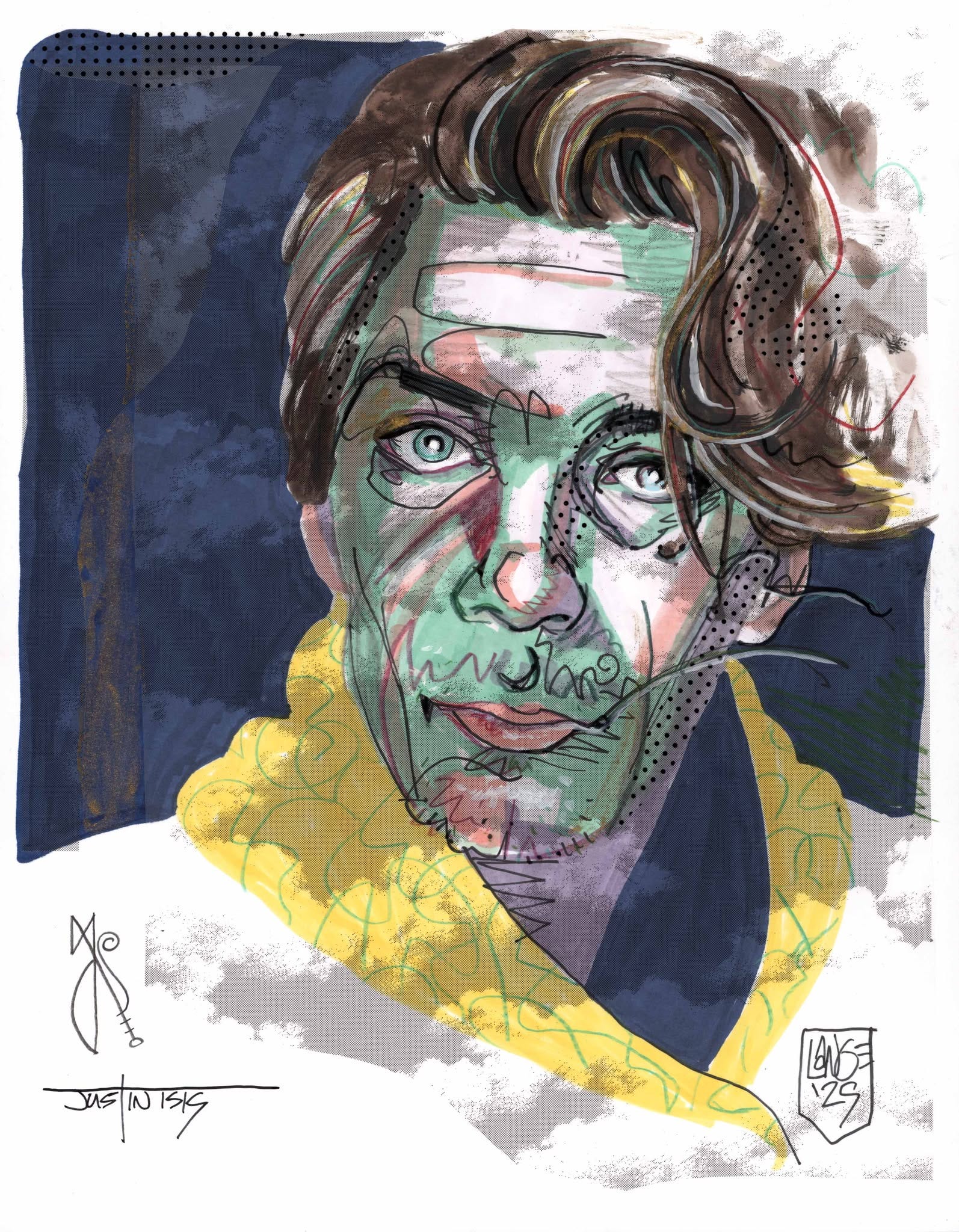
The third of our contributors to be interviewed is Tokyo-based writer Justin Isis, the editor of this Substack.
WHILE YOUR FICTION WRITING SEEMS TO SIT COMFORTABLY UNDER THE ADMITTEDLY VAGUE BANNER OF ‘NEO-DECADENCE,’ YOUR LARGER PROJECT (WHICH FOR LACK OF A BETTER TERM WE WILL CALL YOUR ‘POLITICAL’ PROJECT) COULD PROBABLY BE BETTER UNDERSTOOD AS ‘NEO-FUTURISM.’ ON THE SURFACE, THE ORIGINAL SOURCES (LATE 19TH CENTURY FRENCH DECADENCE, EARLY 20TH CENTURY ITALIAN FUTURISM) HAVE LITTLE IN COMMON. HOW DO YOU RECONCILE THESE DISPARITIES?
There’s a sense in which 19th century Decadence and Italian Futurism were the same Current. The Decadents already outlined the machinic future envisioned by the Futurists; check out The Future Eve by Villiers de L’isle-Adam, or read Des Esseintes’ take on locomotives in À Rebours. Marinetti’s innovation seems to have been simply to avoid the Huysmans Flip (or at least until fairly late in the game). Instead of fleeing back to the peace and safety of a new Dark Age as many of the Decadents tried to do, he chose to embrace the present (which he called the future).
The paradox here is that all self-described Futurists, in 2025, are nostalgists (Neo-Passéists). We already live in the world that Marinetti envisioned, and have been doing so for several decades. “Accelerationism” is just a cringe academic rebranding of Futurism (the word itself taken from Roger Zelazny’s Lord of Light). There is really nothing that the likes of Nick Land and rest have “imagined” that Marinetti didn’t already put forward (and without recourse to self-vitiating academic jargon).
Looking for vitality in the past is a pointless exercise, given that its idiocies remain forever on naked display. There is no way to remain truly alive while concerned with “Tradition”—which now includes the Futurists. Why anyone would want to dig up d’Annunzio’s grave or cosplay as Marinetti in 2025 is beyond me. It seems to me that these Revivalists must lack a sense of self so completely that pretending to be dead people seems preferable to facing the absence in the mirror. It’s infinitely worse than never having been born, because that would at least absolve you of the responsibility to exist. These types apparently have nervous systems but seem never to have used them. I believe some of them are operating “art galleries,” which are exactly the same kitsch pseudo-museums that Marinetti wished to destroy.
REGARDING ‘TRADITION’: DO YOU THINK THERE’S A RELIGIOUS ASPECT TO OCCULT PRACTICE? AND IF SO, DOESN’T RELIGION, MORE THAN ANYTHING ELSE, RELY ON WHAT COULD BE CALLED TRADITION?
Everyone is supposed to create their own religion, which means everyone is supposed to individually encounter the primal sources of tradition. There’s the old chestnut about “religion is a defense against religious experiences.” Of course most people don’t want upsetting “religious experiences” any more than they want to hunt animals for each meal. Where religion or esoteric experience is concerned, I’m obviously going to favor the hunters and trappers over the consumers and congregations.
But people like routine, continuity, and all those reassuring OCD virtues. Who are we to pull the rug out from under them and piss in their living room? There is an enormous number of people on Earth at the moment, and someone has to come up with predictable things for them to do. In practice these things are usually absurd idiocies. When I think of something like the physical attacks on Salman Rushdie, I do think the “passion” of these idiots would be better spent in the backbreaking building of a pyramid. I wonder if that would be traditional enough? Maybe the pharaohs had the right idea.
IN ADDITION TO WRITING, YOU’VE ALSO EDITED MANY BOOKS AND COLLECTIONS. DO YOU VIEW EDITING AS AN ACTIVELY CREATIVE ROLE, OR SOMETHING MORE NEUTRAL?
I didn’t set out to edit as many anthologies or organize as many group projects as I have, but there has never been any sort of existing infrastructure for the things I’ve wanted to create. Everything about the publishing industry in the 00s and 10s seemed to actively oppose and suppress anything I found interesting or exciting. In particular, “genre thinking” really calcified in the 2010s. If I’m honest with myself, I knew that no one else was going to create a true 21st century art movement. I knew too that the genuinely imaginative and original work of the contemporary writers I respected was never going to be acknowledged by the existing channels.
In 2020, there were exactly 0 books released similar to Neo-Decadence: 12 Manifestos. This is still the case, except that now everyone wants to write manifestos and declare new movements (Neo-Romanticism, anyone?). I’m used to being ahead of the curve so it’s exactly what I expected would happen, and what I thought really should happen. The more writers become consciously aware of their artistic principles and allow them to guide what they create, the more interesting things they’ll produce. We just need to hurry up and destroy the academic infrastructure (the automaton factory). The future belongs to independent, self-declared movements.
So, I’ve only ever edited or organized things out of what I considered artistic necessity (including this Substack). In practice, the degree of, let’s say, “editorial control” definitely increased over time, so that with the earlier anthologies, such as Dadaoism from 2012, I really gave the contributors very little instruction or hands-on editing. With Neo-Decadence Evangelion (2023), the instructions and guidelines were extremely specific, and I communicated to the writers involved much more clearly what I thought they should write about and how I thought they should do it. In my view, this led to a much better final result. With that said, I have no desire to be Gordon Lish, and for the foreseeable future I’m focusing on my own books.
MY PERSONAL EXPERIENCE WITH DMT IS EXTREMELY LIMITED, YET ON MORE THAN ONE OCCASION I’VE GOTTEN THE SENSE THAT YOUR WRITING TAKES DIRECT INSPIRATION FROM THIS HALLUCINOGEN, ALONG WITH THE ASSOCIATED ENTITIES KNOWN AS ‘MACHINE ELVES.’ WHAT ROLE, IF ANY, CAN MACHINE ELVES PLAY IN THE FUTURE OF NEO-DECADENCE? CAN THEY POTENTIALLY FUNCTION AS A REMOTE AUDIENCE, OR EVEN COLLABORATORS?
Next month in Tokyo I’m interviewing Dr. Andrew Gallimore—probably the world’s foremost expert on DMT at this point. I’d recommend his three books Alien Information Theory, Reality Switch Technologies, and Death by Astonishment, in which he lays out his takes on the neurochemical, pharmacological, and finally ontological properties of DMT. Gallimore’s metaphysical standpoint is different from mine, but his arguments are worth understanding and taking seriously.
The mystery of DMT seems to me to be as great as the mystery of life and death. My outlook, which I’ve expressed before, is that at this point I can’t really take any fiction writer without psychedelic experience entirely “seriously.” And I don’t mean “occasionally doing low dose mushrooms and weed” here—I mean heavy and sustained use of tryptamines at extremely high doses, salvia “abuse,” etc. You need to have gone far enough to encounter what lies on the other side of these experiences. That’s all I’ll really say.
This is perhaps comparable to writers who seriously practice occult work vs those who don’t. The latter can’t even really conceptualize the activities of the former, much less replicate their broader perspective. The practitioners are going to overtake the non-practitioners to an extent that becomes somewhat ridiculous. It’s why Damian Murphy destroys almost everyone else—he’s writing from experience with faculties that the standard MFA moron isn’t even aware exist.
Note that I’m not saying psych use in itself is going to make anyone a great writer. It’s just a baseline—in the same way that I’d rather not read fiction about sex written by virgins (with the notable exception of James Champagne).
Everyone should become a bodybuilder too. No irony.
I DON’T THINK IT WOULD BE HYPERBOLE TO DESCRIBE YOU AS AN INTERNATIONAL MAN OF THE WORLD—BUT YOU ALSO HAVE HUMBLE ORIGINS IN SMALL TOWN PENNSYLVANIA. AS YOU NAVIGATE THE FLASHING LANDSCAPE OF TOKYO DO YOU RETAIN ANY VESTIGIAL VALUES THAT WOULD TYPICALLY BE ASSOCIATED WITH THE AMERICAN MIDWESTERN WORLDVIEW?
Probably not, although it’s difficult to say!
The fact remains that neither of my parents were citizens of the country where I was raised, although I achieved this distinction through birth. The triangulation between father language+culture world, mother language+culture world and external surroundings language+culture world created a number of problems that I still haven’t fully resolved. In my experience, these problems are basically incomprehensible/invisible to anyone who hasn’t been confronted with them since childhood.
I’ve met a few writers recently with similar backgrounds (Ivan Niccolai of Notes from the periphery is one) and the particular skewing of perspective is instantly recognizable to me. We’re just not going to see or frame things in the same way as writers who have a more fixed residence or national identity-concept.
DO YOU WATCH AMERICAN PORN OR JAPANESE PORN?
The only pornographic images and videos I “consume” are those I’ve produced myself and play a role in. So the nationalities are a bit…all over the place. On the whole I’m not very sexually interested in people I don’t know personally, and with anyone still unknown who interests me, I usually end up meeting them and seeing where things lead (this includes the class of citizens often termed “porn stars” or “AV actresses”). I don’t believe in lavishing my sexual responses on people who aren’t aware I exist. It’s an acceptable place to start as a teenager, but by the time you’re in your twenties and up…
YOU’VE SAID ON THE RECORD THAT YOU ADMIRE THE WORK OF NAIL AND EYELASH TECHNICIANS. WHERE WOULD YOU PLACE THESE CREATIVE WOMEN ON THE ARTIST/CRAFTSMAN SPECTRUM? AND DOES SUCH A DISTINCTION EVEN MATTER?
At this point I find them (and the general fashion world) more interesting than the total lifetime output of the majority of writers, musicians, and filmmakers. The problem with most artists and writers is that they start by trying to aggressively conform to type, which means they read the same books and watch the same films as everyone else. I hate to always be the one to point out that watching David Lynch films and reading Bolaño or whatever doesn’t actually make you some sort of mindblowing nonconformist, but the bar is lower than I think anyone wants to admit.
Whereas a nailist or technician is more concerned with simply producing something beautiful and unusual. Even the current advances in dental jewelry are vastly more interesting than anything Garth Greenwell or RF Kuang is going to come up with. Almost every serious nail artist I’ve met (and I’ve met a lot—like more than is probably reasonable or necessary for research purposes) has considered themselves an artist, and has taken their work at least as seriously as any writer or filmmaker. In Tokyo, the standard is extremely high.
WOULD YOU EVER GET PLASTIC SURGERY?
I probably will at some point, even though I feel no pressing “need.” Researching it extensively for fiction has definitely increased my overall interest.
I also like the idea of looking vastly different at various points in my life, or doing things only when they’re no longer considered “appropriate.” For example, getting tattoos in your teens and twenties always seemed like a cliched move to me. But suddenly going “all out” and getting full sleeves or a traditional needlework covering in your seventies, when no one is expecting it, seems like it’d be fun to pull off.
DO YOU FOLLOW ASIAN CURRENT EVENTS? WHAT IS JAPAN’S CURRENT RELATIONSHIP WITH THE REST OF ASIA? AND DO YOU THINK EASTERN CULTURE AND SOCIETY IS GENERALLY OUTPACING THE WEST?
I don’t think it is culturally outpacing the West, although I’d say China has the best chance of doing so. Any time in the past few years when I see anyone with interesting fashion, or producing interesting art, they’re always from China. In contrast, South Korea and Japan might as well be graveyards.
Politically, as Japan spirals further into demographic suicide and general global irrelevance, it naturally looks for scapegoats. These are also entirely predictable: immigrants. So, the stances taken by Sanseito, Sanae Takaichi, Kimi Onoda and the like are exactly what we would expect. To be fair, it’s easy to understand. The increase in tourism here over the past two years has been truly unendurable. No one wants their streets inundated with loud, large, ugly, poorly-dressed louts (the majority of tourists from Europe and the Anglosphere). And the livestreaming idiots really do merit the violent reception they sometimes receive.
Realistically, nothing and no one is going to make Japan “great” again any more than they are going to achieve this with America. It will become an impoverished multicultural society whether it likes it or not. Will many things worsen as a result? Probably, but so what? Writers should interact with and document their times, not bemoan them.
IT STRIKES ME THAT THE SUBJECT AND INFLUENCE OF CYBERPUNK DOESN’T COME UP NEARLY AS OFTEN IN NEO-DEC SOCIAL CIRCLES AS ONE MIGHT SUSPECT. IS CYBERPUNK SIMPLY TAKEN FOR GRANTED? OR IS IT NO LONGER RELEVANT? AND WHY DOES A MUCH OLDER AND STODGIER GENRE LIKE ‘WEIRD FICTION’ CONTINUE TO FEEL LIKE A POORLY DRESSED GUEST WHO HAS PERHAPS STAYED TOO LONG AT THE PARTY?
“Weird Fiction” has to be the most dismal pisspool conceivable. You know what they say about a pool of talent that feeds on itself. If you really want a recipe for predictable writing, just make sure everyone in the scene has the exact same four or five influences, then see what they come up with. Well, we saw—in the 2010s. I think after the 787th possible Lovecraft/Chambers pastiche, it’s preferable to just hang yourself. I don’t know how anyone could possibly take “Weird Fiction” seriously at this point. And I say this as someone whose first book was blurbed by Ligotti.
Cyberpunk was interesting and relevant—in the early 1980s. Although there’s an argument to be made that Cordwainer Smith invented it in the 1940s with “Scanners Live in Vain.” And Gibson and the rest were leaning pretty heavily on Bester, Zelazny, etc. All well and good—but the fact that we’re watching new Blade Runner movies and playing “Cyberpunk” video games at the time when those fictional worlds were supposed to take place is a bit disconcerting. Neo-Passéist, even.
The elements of science fiction that continue to interest me are more remote from present reality: things like Greg Egan’s counterfactual math-based speculative works.
I’VE RECENTLY BEEN SEEING MORE AND MORE THINK PIECES FROM LEGACY MEDIA SOURCES WITH CENTRAL TALKING POINTS THAT SEEM EXTREMELY ADJACENT TO CRITICISMS THAT THE NEO-DEC SCENE HAS BEEN RAISING FOR SOME TIME. FOR EXAMPLE, A RECENT NEW YORKER ESSAY USED THE TERM ‘NEW LITERALISM’ TO DESCRIBE CONTEMPORARY HOLLYWOOD FILMS (SUCH AS THE EXTREMELY OVERRATED AND BLUNT PASTICHE, THE SUBSTANCE). ‘NEW LITERALISM’ IMMEDIATELY SOUNDS LIKE A WATERED DOWN VERSION OF ‘NEO-PASSEISM,’ AND WRITING ABOUT HOLLYWOOD IS INNATELY UNDIGNIFIED—NEVERTHELESS, IT’S SOMEWHAT HEARTENING TO SEE SQUARE OUTLETS CALLING FOR A RETURN TO SATIRE, SYMBOLISM, EXPRESSIONISM, OR ANY OTHER MODE THAT GOES BEYOND LINEAR A TO Z PLOTS AND MORALLY-CENTERED ‘CHARACTER ARCS.’ ARE WE ON A CUSP? IS THE LONG BALLYHOOED ‘VIBE SHIFT’ FINALLY GOING TO MATERIALIZE?
I consume next to zero televisual media at this point, so it’s difficult for me to comment on anything happening in Hollywood. But the film industry is also unavoidably caught up in the same capitalist time hole that has sucked in 21st century writing, art and music. There is a sense in which filmmaking is over, and was always only ever a 20th century concern.
I also stress that no one wanted to hear those Neo-Decadent criticisms in the 2010s when we were first making them. If some of our takes now seem self-evident, they really weren’t at the time. I think most people now can look at this Substack and quickly get an idea of what is meant by Neo-Passéism, but the concept was difficult to get across in the 2010s. People really resisted the idea that allegedly “literary” or “award-winning” writers were part of the same kitsch content production factory as Marvel movies. I suppose it counts as a success that more people are getting it now, but simply accepting a diagnosis isn’t the same as being cured. The 2010s ending, while certainly a relief, doesn’t imply any sort of immediate or automatic increase in literary or artistic quality. I think any real vibe shift will probably take until the end of this decade to arrive.
There are interesting things happening on Substack, though. For example, the waning credibility of the idea that we’re supposed to respect people on here who have been traditionally published and have money-wasting promotion machines behind them. For me, having an MFA and releasing things on major presses makes me respect you LESS, not more. We were saying this in the 2010s, but it’s only recently that people are starting to realize we’re not exactly joking. At the same time, people are still trying to do the “literary magazine” thing and pretend like the format is still relevant. It’s an interesting transitional period.
REGARDING ‘TELEVISUAL MEDIA,’ YOU DO SOMETIMES MAKE TIME FOR IT THOUGH. I KNOW FROM OTHER CONVERSATIONS THAT YOU RECENTLY REWATCHED THE PEANUT BUTTER SOLUTION, WHICH WAS A MADE-FOR-TV MOVIE. AND YOU ALSO HAVE AN ACTIVE INTEREST IN SOME OLDER TV PROGRAMS LIKE FILMATION’S GHOSTBUSTERS AND SAPPHIRE & STEEL. DOES TELEVISION INTEREST YOU MORE THAN CINEMA?
In practice it probably does interest me more. At this point I’m not going to sit around and intentionally watch random Tarkovsky or Bergman things I haven’t seen yet, and the last roughly 30 years of mainstreamish Hollywood output holds zero interest for me. But I do watch (mostly very obscure) television from the 1980s, 1970s and 1960s sometimes to unwind. This includes anime from the time that no one cares too much about now. But anything that is currently in the running to be made into a Netflix series or is otherwise considered a still “relevant” point of reference, doesn’t interest me. I don’t want to belong to some fake nostalgia “community” that shares memes and gets excited about this stuff. I just want to watch things that maybe never blew up as much as other things from the time and that actually are too “outdated” to interest normal people now. Things I enjoyed during my childhood don’t seem terribly interesting at all to me now, and I don’t revisit them.
Also, for complicated reasons owing to my complicated background, I have fairly embarrassingly vast knowledge of things like 1970s British television (Ripping Yarns? The Goodies? The Two Ronnies? All of the above) and anodyne 1980s anime like Yawara! and Jarinko Chie. None of this stuff would likely appeal too much to people who read my books. The same could be said of most music I regularly listen to. I’m always amazed when people expect me to be keeping up with black metal or extreme noise projects or whatever. It all seems incredibly pointless to me.
I’M JUST GONNA THROW SOME NAMES AT YOU, AND YOU CAN FIRE BACK BRIEF REACTIONS.
Let’s go.
CLIVE BARKER
Monstrously underrated at the moment, and punished by an undeserving public for simply doing too much. His early novels are much better written, on a sentence-by-sentence level, than most of what now passes for “literary fiction.” The standard of invention is uniformly high. His paintings and films remain interesting. He’s really done nothing of consequence for the past twenty-five years or so, but what of it? His run from 1985 - 1995 is more than enough for a lifetime.
BRIAN ENO
I like his fashion from the Roxy Music era, but otherwise haven’t found many points of interest in his actual music. No doubt I’ll find the entry point some day.
AUSTIN OSMAN SPARE
An incredibly talented visionary artist: also the worst possible explicator of his own magickal ideas. Still, he undeniably created his own system and practiced it, which is more than most achieve.
AUDREY SZASZ
An original and very worthwhile writer who I had the pleasure of publishing in Neo-Decadence Evangelion. Also takes her fashion seriously, which is another plus.
SHANIN BLAKE
I know nothing about her, although it’s difficult to find her aesthetic as offensive as many others that are around.
TADEO ANDO
An interesting architect, but possibly overrated?
JOAN DIDION
I’m not coming up with very strong reactions to any of these figures, which is a bit disappointing—and while I’d like to say that I actively dislike Didion, I’ve in fact read next to nothing from her. With that said, nothing about her really interests me, or makes me want to look deeper. Partly it might be that I’ve never been terribly interested in California, which has the same self-mythologizing problem as New York. Both these states need to get a grip and realize that the rest of the world actually isn’t sitting around envying them or longing for status updates. I just say this because it’s impossible to imagine Didion living in West Virginia or Portugal or wherever and still writing the same kind of things.
STEVE JOBS
I relate to him in various ways, which is a bit uncomfortable to admit (ask me about my discomfort at aggressively relating to Kingsley Amis next time). Otherwise, mostly outside my field of comment. He can’t be blamed for smartphones—they would have come into being even if he had never existed.
GEA PHILES
I look forward to her upcoming illustrations of my books.
TODD MCFARLANE
A terrible, if distinctive, artist. It’s telling that Greg Capullo and various other artists and writers were able to do more with his own creation than he ever was. An excellent businessman, on the other hand, and Image has released enough quality material over the years for us to be grateful for its existence.
RACHEL RABBIT WHITE
Had to Google her. Seems like she is writing poems about the vagina? This is always a worthwhile pursuit.
OSWALD SPENGLER
Accurately described the future. Those who consider him some kind of Nazi or reactionary almost certainly haven’t read him.
WILLIAM BUTLER YEATS
I probably think about Yeats every other day, and have large portions of his work memorized. I’m annoyed there isn’t a Yeats-equivalent poetic talent around now (or even a Larkin-equivalent one). I’m sure there will be eventually, although it might not happen in my lifetime, which is somewhat dispiriting.
ALEKSANDR DUGIN
Also mostly unfamiliar with him, and doesn’t seem terribly interesting. My problem with most “political” thinkers of this ilk is that I think the West ended around 350 AD, with the death of Emperor Julian. Everything since has mostly been bad comedy.
LAST QUESTION IS A TWO-EDGED SWORD. SAY SOMETHING PESSIMISTIC ABOUT THE FUTURE, AND THEN CONTRADICT YOURSELF BY SAYING SOMETHING POSITIVE ABOUT WHAT MAY COME.
Pessimism is of course very boring, and should be avoided whenever possible. Especially if you have reliable health insurance, regular access to food, etc. But, speaking locally—
I doubt much will change in the immediate future, by which I mean the next few decades at least, and probably the rest of this century. Writers and artists producing serious work will have global audiences in the low hundreds, if that. Most of the public will be taken up with the same empty spectacles as they are now, with the process requiring even less human input than ever. The sociocultural pendulum will swing meaninglessly as one tedious orthodoxy is replaced by the next. With less and less required for humans to actually “do,” they will fight to keep themselves busier than ever—anything to distract themselves from the realization that they are normie idiots who can’t concentrate on one thing for five minutes, let alone produce anything of lasting importance.
But, in a deeper sense, everything important actually does take place underground, by which I mean it is always invisible at first. This has always been the case, and there’s no reason to think the present is any different. I suspect that, after having passed through the sieve of time, many creators who are at present total obscurities will be considered the greats of our era, while those currently receiving money and attention will be thought of, if at all, as unmemorable producers of period pieces (I especially suspect this will be the case with those who seem determined to write “Internet novels,” or otherwise autofictionally romanticize what are objectively very dreary and unremarkable existences). The world-historical poets of the past really only wrote for a small circle of friends, and this still seems to be the only reasonable approach to take. Why should we care what people we wouldn’t want to spend five minutes with in real life think of what we create?
art and interview by Aaron Lange
Years ago, a friend and I were nodding on heroin and arguing about who was hotter: Susan Sontag or Joan Didion. Let it be known for the record that I was in Joan's corner, and beyond her hotness just think she's great generally.
I loved Play it as it Lays—one of the few books I’ve ever read that I thought was too short and could have used less editing. It wasn’t until I read that that I realized what a huge influence Didion was on Bret Easton Ellis, another favorite writer of mine.
Annoying interview, btw, but I’m sure that was the point. I love this account, guys, you have a major fan here.